




As a governing body, the Tribal Council sets policy, makes laws and implements the direction voted upon by Tribal membership. The structure of the Tribal Council is comprised of five positions and four proxy members. The Tribal Council Members are elected by secret absentee ballot and the four proxy members are appointed by the elected Tribal Council. The three Tribal Council officer seats are for a staggered two-year term and the two members for a one-year term.
Jeff L. Grubbe
Chairman
Read More
Anthony W. Purnel
Vice Chairman
Read More
Savana R. Saubel
Secretary-Treasurer
Read More
Vincent Gonzales III
Member
Read More
Moraino J. Patencio
Member
Read More
Jeff L. Grubbe
Chairman
Anthony W. Purnel
Vice Chairman
Savana R. Saubel
Secretary-Treasurer
Vincent Gonzales III
Member
Moraino J. Patencio
Member
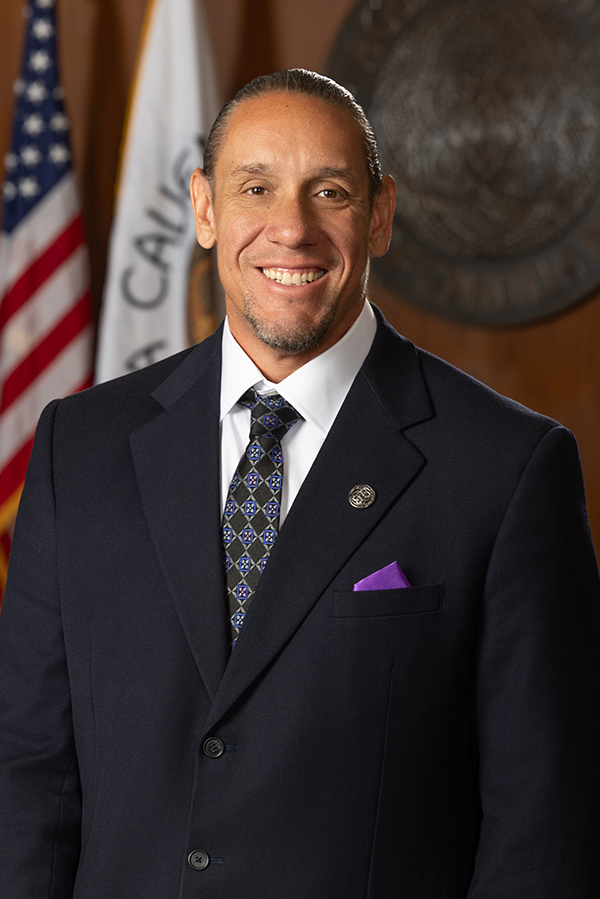
Jeff L. Grubbe serves as Tribal Chairman for the Agua Caliente Band of Cahuilla Indians and was elected to the position again in April 2026. He previously served as Tribal Chairman from June 2012 to April 2022. Chairman Grubbe continues a legacy of service and follows in his grandfather Lawrence Pierce's footsteps, who also once served on the Tribal Council.
Grubbe served six years starting in 2006 on Tribal Council, including five as Vice Chairman, before being elected Chairman in 2012 and again in 2026. Prior to his service on the Tribal Council, Grubbe worked as a data entry clerk in the Trust Enforcement Support Activities (TESA) department for the Bureau of Indian Affairs.
His work for the Tribe has spanned many years. In 1999, Mr. Grubbe entered the Agua Caliente Casinos Tribal intern program where he worked in the casino as a table games shift manager. His experience eventually led to his involvement in other Tribal service including the Agua Caliente Child Development Committee, the Agua Caliente Election Board, the Gaming Commission, and the Tribal Building Committee. Chairman Grubbe later served on the board of the Agua Caliente Development Authority.
Grubbe graduated from Palm Springs High School in 1995. He earned his bachelor's degree in information systems from University of Redlands. He earned a two-year degree from Haskell Indian Nations University, where he also played football.
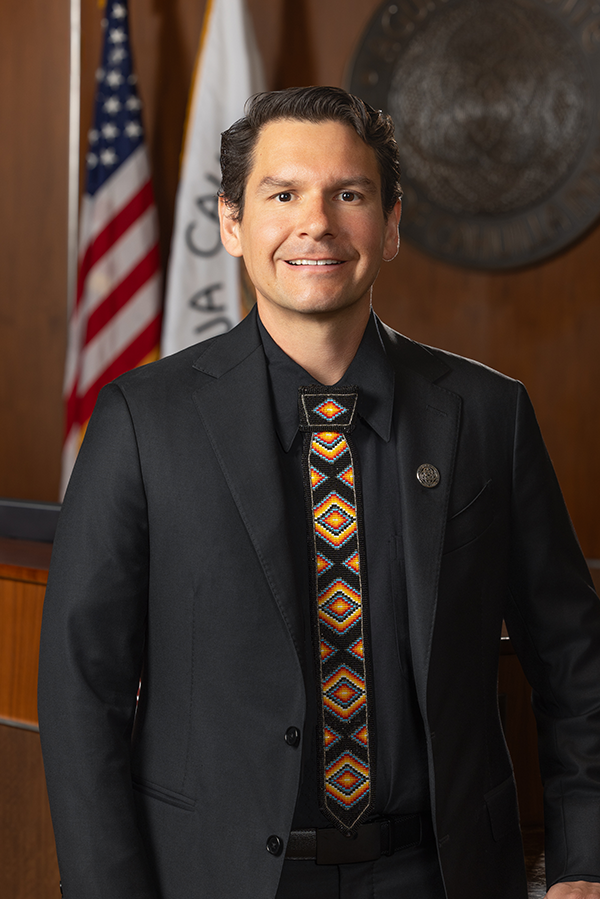
Born and raised in the Coachella Valley, Anthony W. Purnel serves as the Vice Chairman of the Tribal Council for the Agua Caliente Band of Cahuilla Indians. He was elected to the position in April 2025.
Prior to that, he served as a Tribal Council Member from 2017 to 2021. He is a descendant of the Kauisik Clan. Mr. Purnel is a bird singer who sings traditional Cahuilla migration songs at celebrations and events.
Since graduating from California State University Fullerton with a dual Bachelor's degree in Business Administration and Communications, Mr. Purnel has worked in technology and graphic design.
Previously to serving on the Tribal Council, Mr. Purnel served on the Tribe's Cultural Preservation Committee and Child Development Committee.
Mr. Purnel was born and raised in the Coachella Valley and graduated from Cathedral City High School. Growing up, he played different sports, and later he also raced road bikes in college.
He is adventurous and is on the trail, at the ocean, or on his bike any chance he gets. In 2017, Mr.Purnel spent 132 days hiking the Pacific Crest Trail from Mexico to Canada.
During his service for the Tribal government, his focus has been on working with all Tribal Council members to create the Tribe's vision for future development, providing opportunities for Tribal Members to stay connected to the Tribe's history and culture as well as working to secure rights for future generations.
In addition, he has been at the forefront of a groundbreaking project the Tribe is undertaking along with the Palm Springs Unified School District and School's Foundation, creating a public-school curriculum that meets state of California educational standards and focuses on the Agua Caliente history, culture, and modern times.
"My culture and heritage are the most important thing to me, and I'm inspired to do everything I can to learn and teach about the history of our people every day," Purnel says. "Our language and songs are absolutely beautiful to hear, and the knowledge our ancestors had about the land and its uses are impressive even today."
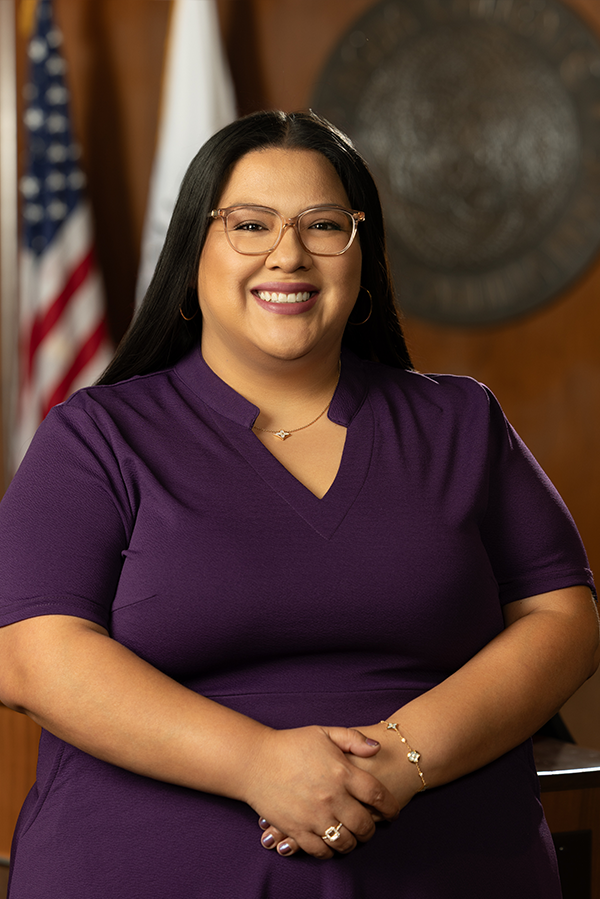
Savana R. Saubel was first elected to the Tribal Council in 2011, following in the footsteps of her great-grandmother, Laverne Saubel, who served on the all-woman Tribal Council in the 1950s. In 2011, Ms. Saubel had the privilege of serving alongside her great-uncle, Richard M. Milanovich, who was Tribal Council Chairman for more than 28 years. His mentorship played a significant role in guiding her through meetings with other elected officials at the local, state, and federal levels, as well as within Indian Country. Her interest in tribal governance was sparked by her father and grandfather, who encouraged her to engage in the Tribe's affairs from a young age when she began attending Tribal Council meetings and volunteering on various Tribal committees.
Tribal family and culture have always been central to Ms. Saubel's life. Her father, James S. Saubel, III, introduced her to Cahuilla bird singing and dancing, which she has practiced since the age of four. For many years, she has dedicated time to the Tribal youth, passing down the Cahuilla cultural traditions to ensure their continuity.
Passionate about youth development, Ms. Saubel has long been an advocate for Tribal youth. She served as the Tribal Youth Liaison and on the Youth Group Committee, consistently emphasizing the importance of empowering young people as future leaders of the Tribe. She remains committed to advocating for their growth and leadership opportunities.
As a young adult, Ms. Saubel became increasingly involved in the Tribe's operations, volunteering on several Tribal committees where she helped to administer Tribal programs for the benefit of the Tribal Members. Additionally, Ms. Saubel was a Member of the Indian Planning Commission and appointed to the Agua Caliente Gaming Commission in 2014, where she gained extensive knowledge of regulatory and compliance aspects of the Tribe's gaming facilities.
Ms. Saubel's motivation for seeking election to the Tribal Council was to contribute to the leadership focused on planning for and safeguarding the Tribe's present and future. Serving on various tribal committees, boards, and commissions allowed her to develop leadership skills and gain a deeper understanding of the tribal government. As a Tribal Council officer, Ms. Saubel is committed to expanding the boundaries of the Agua Caliente Indian Reservation through land reclamation efforts and creating new business opportunities to strengthen and sustain her community.
A 2004 graduate of Noli Indian School, Ms. Saubel earned her Associate of Arts degree in Liberal Arts: Business and Technology from California Indian Nations College in 2021. She completed her Bachelor's degree in Organizational Leadership from Arizona State University and has earned a Master of Legal Studies, with an emphasis in Federal Indian Law. In recognition of her leadership and dedication to her community, Ms. Saubel was named among the 2025 Native American 40 Under 40 by the National Center for American Indian Enterprise Development. The award honors individuals for their leadership, initiative, and commitment to their professions and communities.
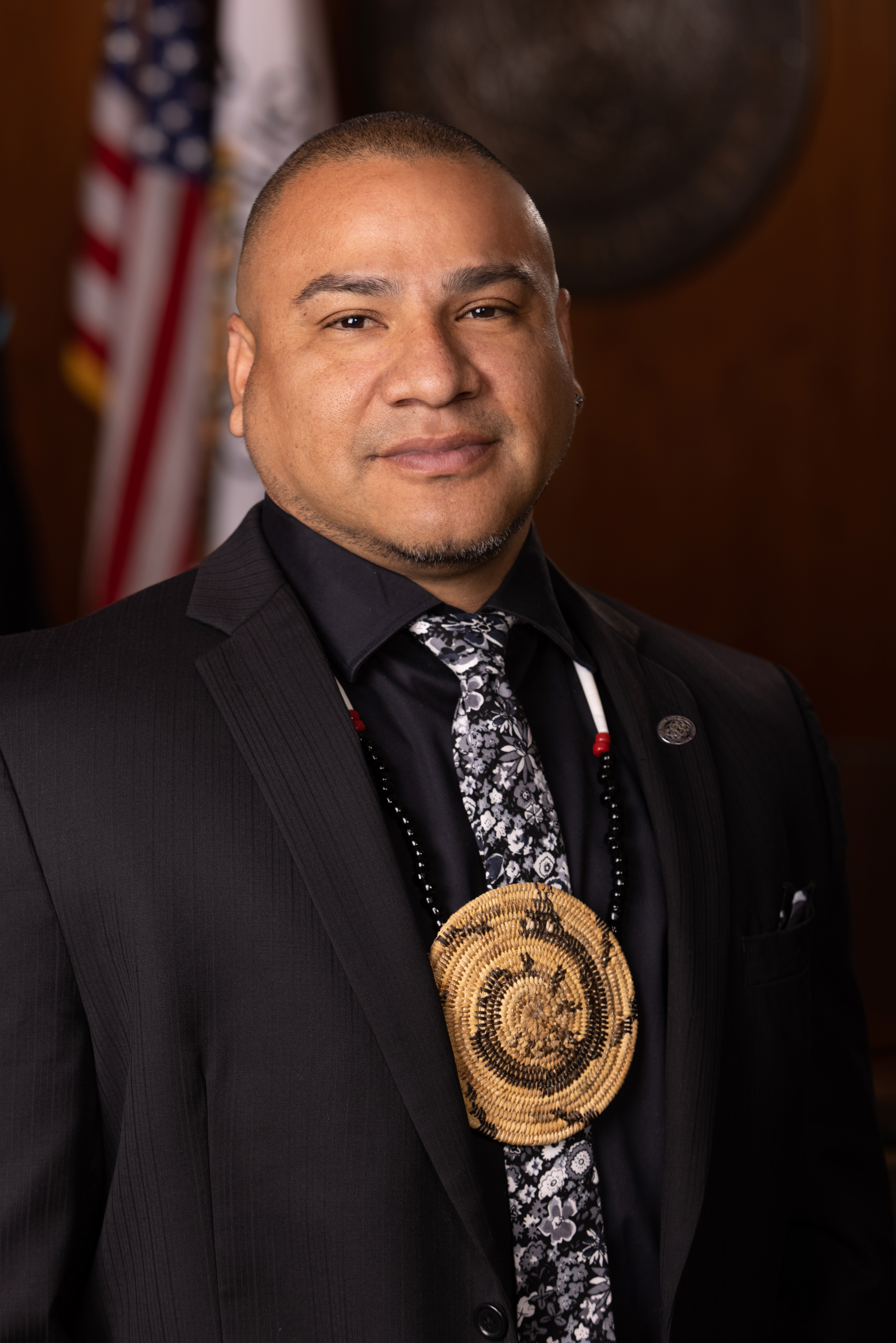
Vincent Gonzales III serves as a Tribal Council Member and was sworn in to office in mid-February 2026. He previously served on the Tribal Council for 15 years in various seats, most recently as Vice Chairman in 2022. Mr. Gonzales is from the Káwisiktem Clan. He is the great grandson of John Joseph Patencio, the last ceremonial bird singer. His goal is to follow his elder family members that have held Tribal Council positions in the past, including Priscilla Patencio, Barbara Gonzales Lyons, and father Vincent Gonzales Jr., all of whom have dedicated their time and efforts to better the Tribe and its future.
Beginning at the age of 16, Mr. Gonzales worked in Tribal operations, and he previously served Tribal Members as a proxy to the Tribal Council. He has also worked for the Trust Enforcement Support Activities (TESA) department for the Bureau of Indian Affairs. In addition, he has an associate's degree in Museum Studies from the Institute of American Indian Arts, and a bachelor's degree in Information Technology from the University of Redlands.
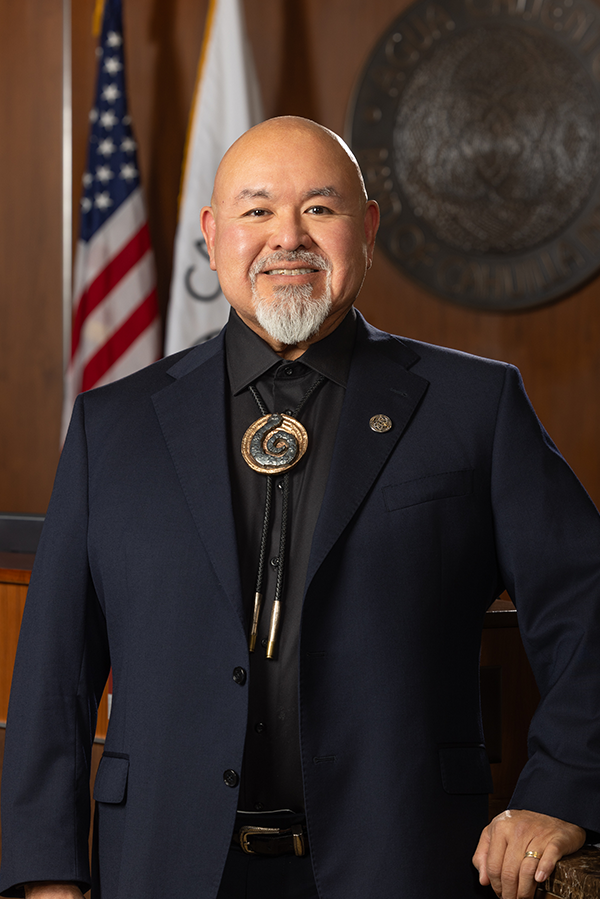
"I come here not as a child to play, but as an old gray haired Council Member to transact the business of the Tribe. I come to this position, having been summoned by our people for the third time, to shape our government to reflect our core cultural values and follow our traditions for leadership to be more responsive to our members' needs," Agua Caliente Band of Cahuilla Indians Tribal Council Member Moraino J. Patencio says.
Moraino has studied the history and political economy of the Agua Caliente for his entire adult life. He has had the honor of serving the Agua Caliente Tribal Council as Vice Chairman, Secretary-Treasurer, and a member at various times since 1981.
For historical perspective only, Moraino's service began three years after our late Chairman Richard M. Milanovich first began his service on the Tribal Council.
Since beginning his service, Moraino has lived through the Tribe's growth from a single office employee to the vast, complex, and varied operations that we see today. He has worked to strengthen the Tribe so that it could have the power and resources to make its own laws and govern itself, balancing the wants of the outside world with the lived experience of the Tribe and its members.
Much of his early work with the Agua Caliente Planning Commission was addressing restorative justice needs resulting from the wholesale down-zoning by the City of Palm Springs while they held the upper hand in the zoning war with the Tribe. When the Tribe finally prevailed, we restored many allotments to their highest and best use zoning before development; however, some members needed to develop under the reduced zoning to provide for their families. These victims of legal violence will need corrective action in the future before any healing can occur. This lived experience is part of the balancing that only our Tribal perspective can truly be useful if we are to continue the long slow arc to historical justice.
While the Tribe grew, Moraino also sought personal growth. In the 1990s, he earned a law degree from UCLA. He then at once returned to serve as the Chairman of the Agua Caliente Gaming Management Committee at the start of the Tribe's gaming enterprise in 1995.
Once the Tribe's first Casino opened, he worked every casino department, concentrating on the slot and accounting departments. He combined this with his earlier hotel accounting and audit experience to move to the regulatory side of the casino industry. He worked with the Agua Caliente Gaming Commission to expand and refine the internal audit department. He then worked with other Tribes' Gaming Commissions to establish internal audit functions and to strengthen their regulatory oversight of their operations.
After another term of service with the Agua Caliente Tribal Council from 2001 thru 2009, he began again working with the Agua Caliente Casino operations as an operations analyst advising casino executives overseeing the financial and operational health of the Tribe's casinos.
He retired for the first time in 2021 and moved to Santa Fe to support his wife's art education. While she earned a BFA from IAIA (Institute of American Indian Arts), he took art classes and began the process of conveying meaning, intention, and emotions through manipulating metal, wood, clay, light, ink, lasers, chemicals, and electronic data.
Moraino Patencio, J.D., lifelong learner, Tribal civil servant, čaxčáaka á'avuwet (diligent elder).
Copyright - Agua Caliente Band of Cahuilla Indians